The Art of Not Being Owned by What We Own
Why owning less is a choice for freedom and a financial one, too.
Today I completed yet another move in my life. Anyone who has been through one knows how stressful it can be to pack up everything you own, ship it somewhere, hope it arrives in one piece, and then do the whole thing in reverse, opening boxes and finding a place for everything.
Maybe because I’ve already moved between two cities this year, this time I felt the need to rethink my approach to moving and, more broadly, to changing my life with less friction.
After moving to Milan from Rome, I laid out everything I had brought with me: roughly ten boxes that I had shipped, two suitcases, and two backpacks. I looked at every item and asked myself whether I really needed it. It was a bit like the Camino de Santiago, where you gradually get rid of everything you don’t need, except I did it after arriving, with the shipping already paid for.
What Was in the Boxes
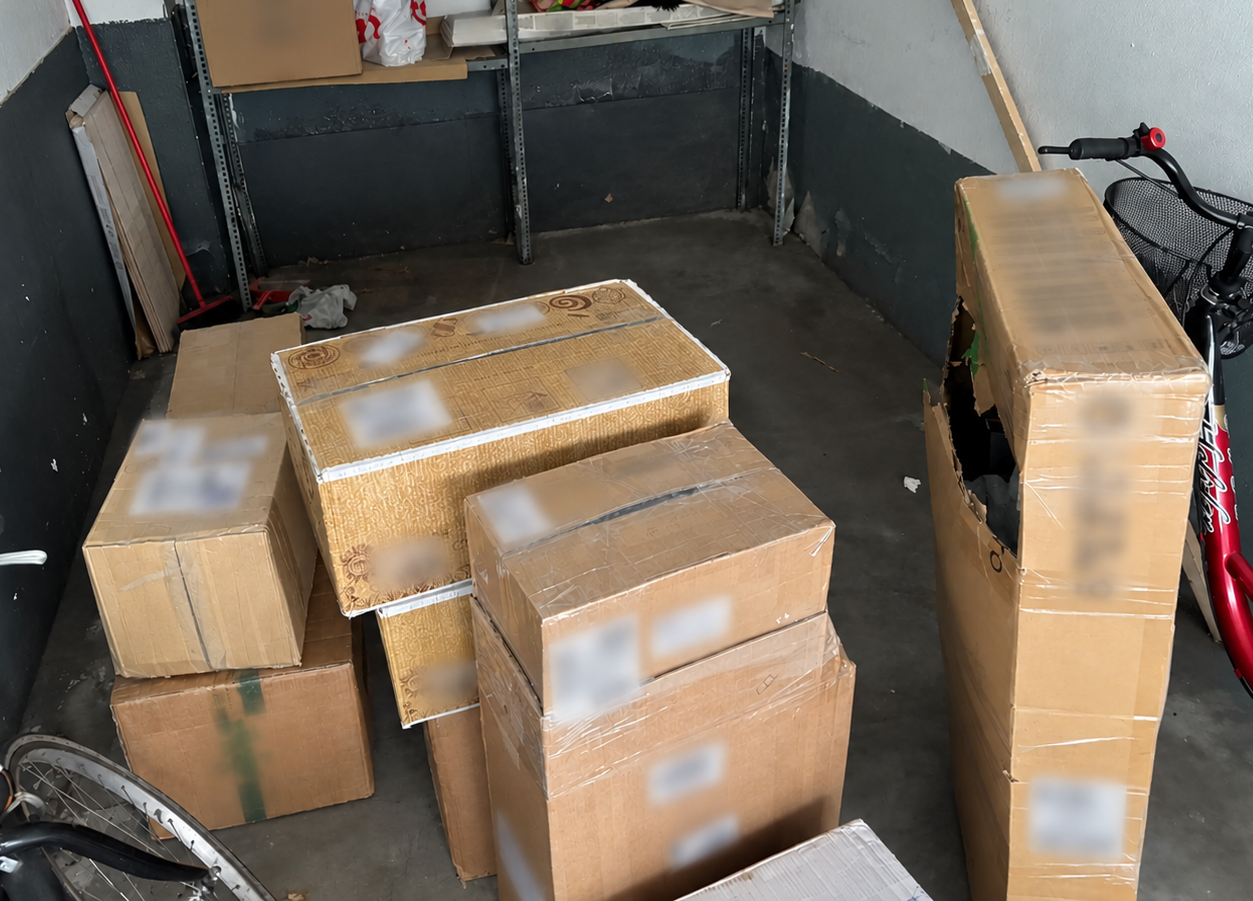
I won’t list every single item, so let’s go by category, in no particular order. There were two piles of clothes, mostly trousers, T-shirts, and sweaters. Looking at some of them, I realized I wore them an average of two or three times a month. Then there were the shoes: about six pairs, each with its own purpose, from running and hiking to sneakers, tennis, and dress shoes. It seemed like a lot, but, all things considered, I could justify them.
Then came the books. A lot of books. Really, a lot. I like the idea of always having a library within reach, ready for a first read or a reread, but culture has its own weight and my shoulders now know it very well.
There was also a collection of things accumulated over time: speakers, two pairs of headphones, a weight bench for a home gym, and more. Finally, there was a large load of towels, sheets, duvets, pillows, an iron, pots and pans, and everything else you might need to run a home.
And yet, without a single piece of furniture, I felt as though I had moved an entire house. How had I accumulated all this stuff? Why had I decided to ship it? Could I have done things differently?
Why We Get Attached to Things (and Why It’s So Hard to Let Them Go)
To answer these questions, it helps to take a brief detour through psychology and behavioral economics. The research I cite has its limitations, which I point out where relevant, and I’ll try to keep separate what the studies actually show from what I take away from them.
The endowment effect. In 1980, economist Richard Thaler coined the term endowment effect to describe our tendency to place more value on things we already own. The best-known study (Kahneman, Knetsch, and Thaler, 1990) involved university students. Some students, selected at random, were given mugs. When asked to sell them, the owners demanded roughly twice as much, at the median, as the other students were willing to pay to acquire one. The object was identical; only the owner had changed. The most commonly cited explanation is loss aversion (Kahneman and Tversky, 1979): giving something up feels more painful than gaining something equivalent feels rewarding.
Objects as part of who we are. According to consumer behavior researcher Russell Belk (1988), our possessions become part of our “extended self” and help define who we are and who we have been. A sociological study of Chicago families, The Meaning of Things (Csikszentmihalyi and Rochberg-Halton, 1981), found that many of the household objects people value most are tied to relationships, memories, and identity more than to their cost or usefulness. That is why getting rid of a book someone gave us, or an old T-shirt, can feel like a small act of erasing part of ourselves.
The stories we tell ourselves. “I might need it.” “I paid a lot for it.” “Someone gave it to me.” These are all arguments I recognize in myself, and I don’t attribute them to any particular study. In more extreme cases, there is hoarding disorder, which has been studied in clinical psychology (Frost and Gross, 1993), but that is a different condition and not what I’m talking about here.
More stuff, more happiness? A 2014 meta-analysis (Dittmar et al.) found that a strong materialistic orientation is, on average, associated with lower personal well-being. Van Boven and Gilovich (2003), meanwhile, found that experiential purchases tend to make us happier than material purchases, which we quickly get used to. This is the phenomenon known as hedonic adaptation (Brickman and Campbell, 1971).
An Emotional Constraint, but Also a Financial One
Seen in this light, what happened to me can be understood as an emotional pattern. Not necessarily a bad one, but in my case, it had become a constraint.
Imagine renting a home and suddenly needing to move. Maybe your landlord has given you a one-month deadline. Maybe you’ve simply had enough of your roommates. Or perhaps the job offer you’ve been waiting for has finally arrived or the love of your life is waiting for you on the other side of the world.
These are just examples, but events like these tend to arrive with little or no warning. No one gives us plenty of notice to start boxing everything up because something is about to change. At that point, possessions become a constraint, and it is often difficult to overcome it because even thinking about moving such a large volume of stuff is exhausting, both mentally and physically. There are two possible outcomes. Your motivation is strong enough to overcome the barrier or, in the worst case, you give up and let things stay as they are, without even considering the catastrophic scenarios that can unfortunately happen.
For anyone interested in personal finance, there is an additional layer: every object has a total cost of ownership that goes far beyond its purchase price. It takes up space, and every square meter filled with things we don’t use is a square meter we are paying for through rent or a mortgage. It has to be moved, whether through shipping, insurance, and rental vans, or through hours of physical effort if we do everything ourselves. And during the move, it can be damaged or lost.
It also requires time and attention: it has to be cleaned, organized, stored, and moved around. And most objects lose value after we buy them.
Above all, there is the least visible cost: flexibility. Being able to accept a job offer in another city, leave a home that no longer works for you, or pursue an opportunity without first having to organize a small-scale logistics operation is a real advantage. A life with fewer material constraints gives you, in a sense, one additional option: the option to change when you need to.
The Art of Not Being Owned
We can’t predict when these events will happen, but we can dramatically lower the mental barrier to change. Imagine that everything you need to move house fits into a suitcase and a backpack. How easy would it be to close them, get on a plane, and start a different life?
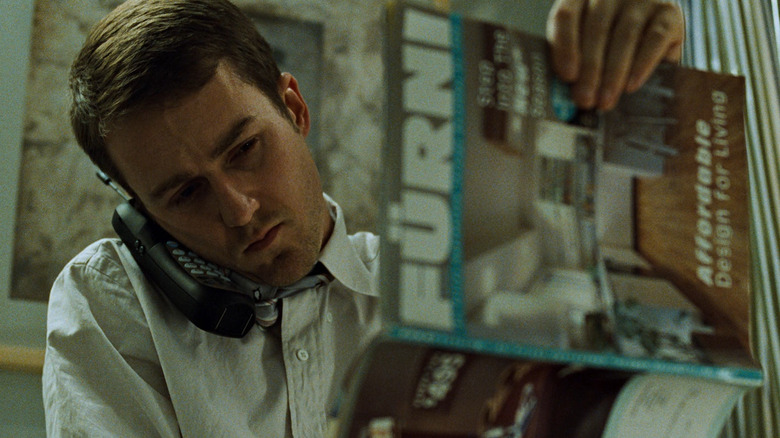
That is where my idea of not being owned by what we own comes from. It echoes a line made famous by the 1999 film Fight Club, based on Chuck Palahniuk’s 1996 novel: the things you own end up owning you. We are the center of our lives, not the things we accumulate. To remind ourselves of that, we can simply change our perspective and treat possessions as consumables or, at most, things that can easily be resold.
In my case, there were four practical ways I could have approached it.
Fewer clothes, chosen with a better framework. A common way to evaluate a purchase is cost per use: the price divided by the number of times you use an item. I find this to be a weak metric, though. There is no objective threshold beyond which a sweater has “paid for itself,” and, more importantly, a low cost per use does not prove that the purchase was a good one. It can easily become a way of rationalizing a purchase you have already made.
I prefer to ask how much it costs me to own something relative to the value it provides, taking into account its price, frequency of use, lifespan, maintenance, space requirements, replacement cost, and residual value.
A €90 item worn three times a month can therefore be an excellent purchase or a waste of money. It depends on the value it provides and the costs associated with owning it.
Sell what you don’t need and buy it again where you do. Speakers, spare headphones, and bulky equipment can often be resold and, if necessary, repurchased in the new city. Someone might object that you lose money when you resell something, and that’s true. But you also lose money through shipping, time, and the risk of damage. The honest comparison is between the resale value minus the cost of repurchasing on one side, and the cost of transporting the item on the other. For heavy, bulky objects, selling will usually come out ahead. For lightweight items that are expensive to replace, shipping may make more sense. It’s worth doing the math case by case.
A library with the weight of a single book. An e-reader such as a Kindle can hold hundreds of titles while weighing roughly as much as a single physical book. And for anyone who doesn’t want to give up paper books, public libraries remain an excellent free alternative.
A quick test for things you’re unsure about. The Minimalists (Millburn and Nicodemus) propose the “20/20” rule. If an item can be replaced for less than €20 (or $20) and in less than 20 minutes, keeping it “just in case” is probably not worth the space and effort.
More broadly, the minimalism I mean is a sense of freedom from possessions not depriving yourself of anything, but simply doing things differently.
The Puzzle and the Exceptions That Matter
Among all the things I found in the boxes, suitcases, and backpacks during this move, I came across a puzzle. I didn’t hesitate for even a second. I wouldn’t sell it or throw it away for any reason.
Some objects, even if they look like nothing more than objects, carry a much deeper meaning: a gift from someone we love, or a reminder of someone who matters to us. In those cases, the choice is not really up for debate, because we are human beings driven by emotions. The most precious memories are built in our minds, but an object can help keep them alive.
The puzzle reminded me that the goal is not to get rid of as many things as possible, because there is no minimum number to reach. Minimalism should not be the art of sacrificing everything to live with one T-shirt and one pair of trousers as your only possessions. It should be the art of not being owned by what we own: recognizing which objects demand more from us than they give back, and which give us more than they cost us. The point is to maximize the value of our lives relative to the constraints our possessions create not to maximize the number of things we eliminate. The puzzle stays. The tenth pair of jeans and the shirt I would wear once a year can go.
Freedom Is an Asset
At the beginning of this article, there were roughly ten boxes, two suitcases, and two backpacks. What weighed on me most was not the physical load itself, but realizing that every object had cost me twice: once when I bought it, and again when I had to move it.
Having fewer material constraints means having one additional option: the option to change cities, jobs, or lives when an opportunity arises, without first having to pay the bill in time, effort, and money. For anyone interested in personal finance, that kind of flexibility has real value, even if it never appears on a balance sheet.
It is worth asking yourself one simple question:
If you had to move to another city tomorrow, how much time and money would it take to bring your life with you?
Further Reading
-
Belk, R. W. (1988). Possessions and the extended self. Journal of Consumer Research, 15(2), 139–168.
-
Brickman, P., & Campbell, D. T. (1971). Hedonic relativism and planning the good society. In M. H. Appley (Ed.), Adaptation-level theory. Academic Press.
-
Csikszentmihalyi, M., & Rochberg-Halton, E. (1981). The Meaning of Things. Domestic Symbols and the Self. Cambridge University Press.
-
Dittmar, H., Bond, R., Hurst, M., & Kasser, T. (2014). The relationship between materialism and personal well-being. A meta-analysis. Journal of Personality and Social Psychology, 107(5), 879–924.
-
Fincher, D. (Director). (1999). Fight Club [Film]. 20th Century Fox.
-
Frost, R. O., & Gross, R. C. (1993). The hoarding of possessions. Behaviour Research and Therapy, 31(4), 367–381.
-
Kahneman, D., Knetsch, J. L., & Thaler, R. H. (1990). Experimental tests of the endowment effect and the Coase theorem. Journal of Political Economy, 98(6), 1325–1348.
-
Kahneman, D., & Tversky, A. (1979). Prospect theory. An analysis of decision under risk. Econometrica, 47(2), 263–291.
-
Millburn, J. F., & Nicodemus, R. (2011). Minimalism. Live a Meaningful Life. Asymmetrical Press.
-
Palahniuk, C. (1996). Fight Club. W. W. Norton.
-
Thaler, R. (1980). Toward a positive theory of consumer choice. Journal of Economic Behavior & Organization, 1(1), 39–60.
-
Van Boven, L., & Gilovich, T. (2003). To do or to have? That is the question. Journal of Personality and Social Psychology, 85(6), 1193–1202.
💬DISCUSSIONS & COMMENTS
COMMENTS CURRENTLY UNAVAILABLE
The comment section is temporarily disabled due to inactivity. It will be restored in upcoming updates!